Read Before You Upload: How to Protect Your Music and Voice in the Age of AI
AI music tools offer incredible creative possibilities, but uploading your original songs and vocal stems without reading the fine print could mean giving away more rights than you realize.
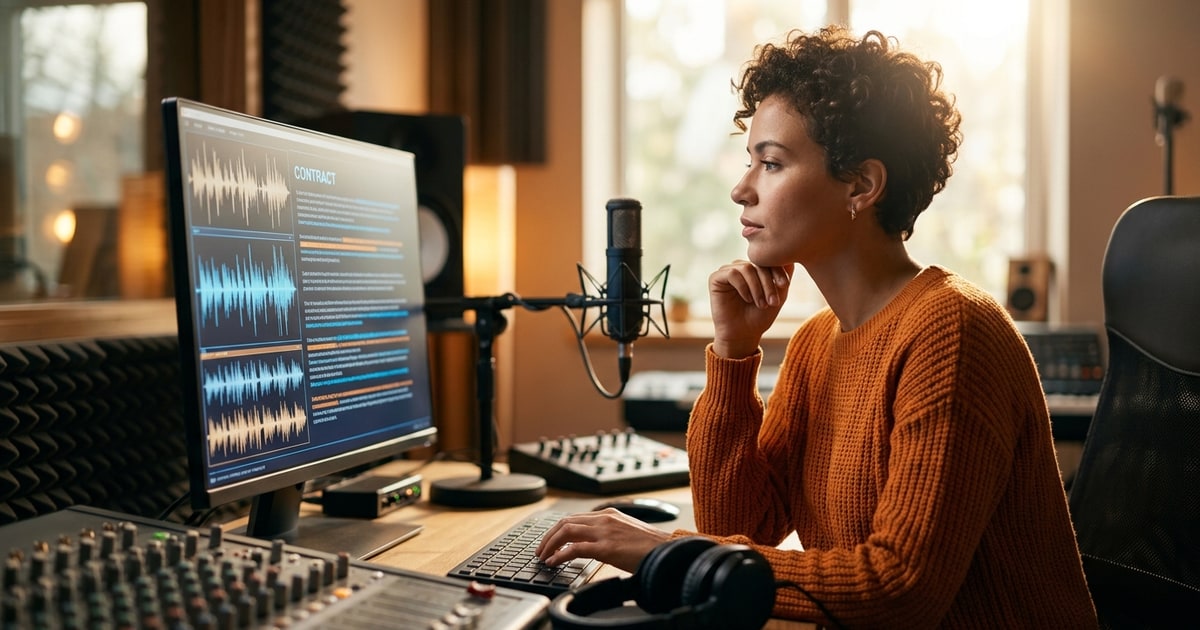
Imagine spending weeks in your home studio, pouring your soul into a new demo. You have crafted the perfect vocal hook, a melody that refuses to leave your head, and lyrics that feel deeply personal. Naturally, you are excited to see what the latest AI music-generation tools can do with your creation. Perhaps you want to hear how a platform like Suno can flesh out your acoustic sketch into a full-band arrangement, or maybe you want to use Kits.AI to hear your vocal line performed by a different studio-quality model.
It is an incredibly exciting time to be a creator. AI music technology is not the enemy; in fact, it is one of the most powerful, inspiring, and useful tools to enter the creative landscape in decades. But in our rush to experiment and hear the magic happen, many of us are making a critical mistake: we are uploading our most valuable creative assets without stopping to read the Terms of Service.
The truth is, your creative work may be far more valuable than you realize. Before you drag and drop your next original stem or vocal recording into an AI platform, it is vital to understand exactly what rights you might be giving away.
The Fine Print: Ownership vs. Licensing Rights
When you upload an original song, demo, lyric sheet, or melody to an AI music platform, you might think, "It is fine, I still own my copyright." Legally, you are usually right. Under standard copyright law, you retain the ownership of your original creations. However, there is a massive difference between retaining ownership of your copyright and granting a company a perpetual, irrevocable, royalty-free, sublicensable license to use your material.
In plain English, you can still "own" your song while simultaneously granting an AI company the right to use it forever, without ever paying you a dime. For example, under the Suno Terms of Service, when you upload your "Submissions" (which includes your original audio uploads, prompts, and lyrics), you grant them a broad, perpetual, and irrevocable license to use, reproduce, and modify that content. This license is often used to train, develop, and improve their AI models.
"You can still legally 'own' your song while having already granted an AI company the perpetual, royalty-free right to use it to train its models."
This means that even if you keep the copyright, the platform may have the legal right to feed your original melody or performance into its machine-learning engine. Once your music is absorbed into the training data, it becomes part of the system's DNA.
The legal stakes surrounding this training data are incredibly high. For instance, on July 31, 2026, the Munich Regional Court I issued a landmark ruling in favor of the German music rights organization GEMA against Suno. The court prohibited Suno's unauthorized use of six specific compositions for training and outputs, ordering disclosure of the scale of use and holding Suno liable for damages. This shows just how fiercely the traditional music industry is fighting to protect copyrighted works from being used as training material without consent.
Your Voice, Your Likeness: The Biometric Frontier
For singers and vocalists, this issue deserves special attention. Your voice is more than just an instrument; it is your biometric identity, your brand, and your personal likeness. When you upload clean, dry vocal stems to create a custom voice model or to convert your vocals using tools like Kits.AI, you must look closely at what you are agreeing to.
Some platforms have strict, ethics-forward policies. Kits.AI, for instance, emphasizes responsible data sourcing, holds a "Fairly Trained" certification, and works to ensure that artists are compensated and have control over their vocal data. However, under the Kits.AI Terms of Service, uploading content still grants the platform a royalty-free, transferable, sub-licensable, and irrevocable license to use, host, and modify your content to operate and improve their services—including training their machine learning models if your account was created on or after October 2, 2024.
If you upload enough high-quality material for a platform to reproduce or model your voice, you need to know: Who owns the resulting voice model? Can the company use your voice model to generate new content without your explicit permission? Does the platform claim rights to your vocal likeness or persona?*
Once a voice model is trained on your biometric data, deleting your account or removing the original audio files may not actually erase the model itself. In many cases, once the AI has "learned" your vocal characteristics, those weights are permanently embedded in the model.
The Ripple Effect: Collaborators and Subscription Tiers
It is also easy to forget that these rules do not just apply to your own solo work. If you are collaborating with a bandmate, producing a client, or remixing a friend's track, you cannot casually upload their performances or copyrighted material to an AI service. Just because a friend gave you permission to experiment with their song in your DAW does not mean you have the legal authority to agree to an AI company's broad licensing terms on their behalf. Doing so could inadvertently grant the platform rights to your collaborator's intellectual property, putting you in a difficult legal position.
Furthermore, the commercial rights to what you generate can vary wildly depending on whether you are using a free or paid subscription tier. Free Plans: On platforms like Suno, songs generated on a free plan are typically restricted to personal, non-commercial use. You cannot monetize them on Spotify, YouTube, or Apple Music. Paid Plans: Upgrading to a Pro or Premier plan generally grants you commercial rights to the outputs you generate while subscribed. No Retroactive Rights:* Crucially, subscribing to a paid plan later does not automatically grant retroactive commercial rights to songs you generated while on the free plan.
Additionally, platforms are constantly updating their rules. In August 2026, Suno announced major updates to its Terms of Service, effective September 3, 2026. Under these new terms, commercial rights attach when you download a track rather than when you generate it. Suno also introduced strict download limits across its tiers—limiting free accounts to 7 lifetime trial downloads, Pro accounts to 20 downloads per month, and Premier accounts to 60 downloads per month. These limits apply even to songs you previously generated, meaning local backups of your work are more important than ever.
Do not assume that deleting your content or closing your account undoes everything. Terms like "perpetual" (forever) and "irrevocable" (cannot be taken back) mean exactly what they say. Even if you hit delete, the platform may retain the right to keep using the data you previously uploaded to train their systems.
The Creator's Checklist: Protect Your Music Before You Upload
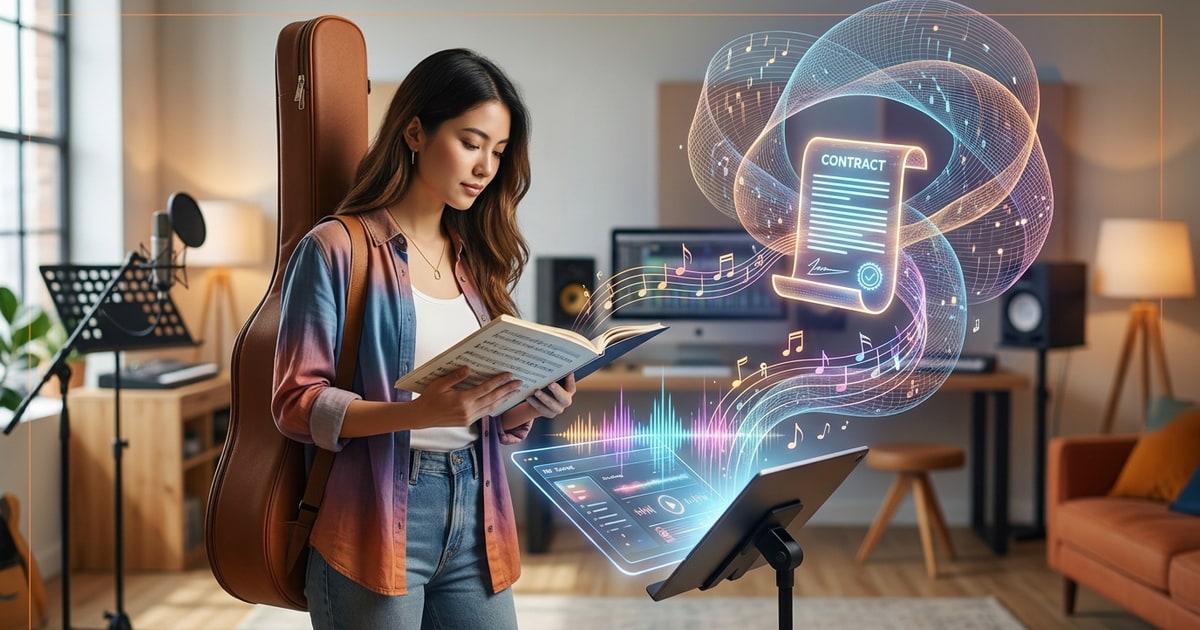
To help you navigate this exciting new landscape safely, here is a practical checklist every musician, singer, and songwriter should follow before uploading any copyrighted material or vocal recordings to an AI service:
- Read the "Submissions" and "User Content" Clauses: Look specifically for what rights you grant the platform when you upload your own files. Look for terms like perpetual, irrevocable, royalty-free, and sublicensable.
- Check the AI Training Opt-Out: See if the platform allows you to opt-out of having your uploaded audio used for AI training or model improvement.
- Verify Your Subscription Tier: Ensure you are on a paid plan before generating any music you intend to distribute, release, or monetize commercially.
- Secure Collaborator Consent: Never upload a co-writer's lyrics, a bandmate's instrument stem, or a client's vocal track without their explicit, written permission to agree to the platform's terms.
- Understand the Voice Model Terms: If you are cloning your voice, verify who owns the custom voice model and whether it remains private to your account.
"AI music tools are amazing. Use them, experiment with them, and learn from them — but before uploading your songs, recordings, or your voice, take a few minutes to understand exactly what rights you are granting. Your creative work may be far more valuable than you realize."
Disclaimer: This article is for educational and informational purposes only and does not constitute legal advice. For specific legal questions regarding your intellectual property, please consult a qualified entertainment attorney.
By taking just five minutes to review the terms before you click "upload," you can keep creating, experimenting, and pushing the boundaries of music technology with complete peace of mind. Protect your art, respect your voice, and keep making incredible music.
Sources
Verified source links
About this article
Marlin Andrews Sr. is the named author responsible for this published work. Blog Zone authors review their final articles and contribute the experience, viewpoint, reporting, or analysis presented.
Read our editorial standards
Community rating
Members can rate this blog
Comments & replies
Share what stood out, add useful context, or ask the writer a question.
Join the conversation
We-Be members can comment, reply, and rate blogs. Membership is free and only takes a moment.