The Watchers Who Hate Being Watched: Inside the Flock Safety Surveillance Backlash
When a security researcher was banned and locked out of a major police surveillance conference, he turned their own technology against them—revealing the deep irony of an industry built on public tracking.
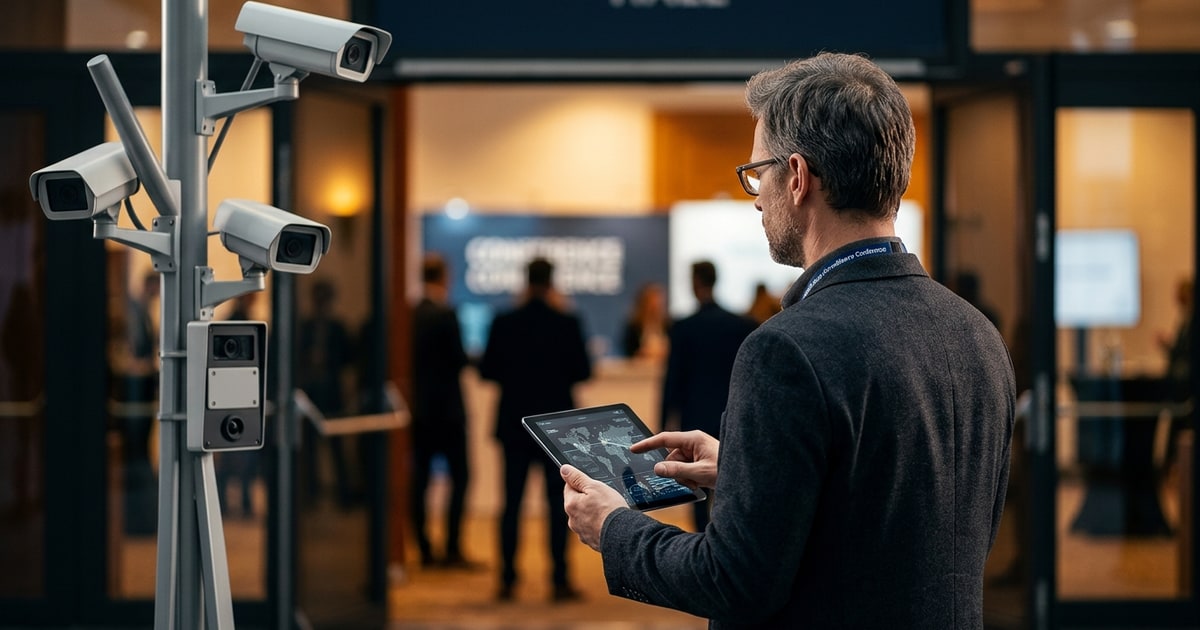
It is a foundational promise of the modern surveillance state: if you have nothing to hide, you have nothing to fear. For years, Flock Safety has built a massive empire on this exact premise, deploying more than 100,000 cameras across the United States to log where citizens drive, when they drive there, and who they are with. But when an independent journalist and security researcher decided to turn that very same lens back on the company, the apostles of total transparency suddenly found they had a great deal they wanted to hide.
Benn Jordan, a technologist and YouTuber known for exposing critical security flaws, recently attempted to attend Flock Safety's "Flock Forward" police surveillance conference in Atlanta. What followed was a masterclass in corporate panic, retaliatory tactics, and a high-tech counter-surveillance operation that exposed the stark double standards of the surveillance industry.
The Irony of the Closed-Door Conference
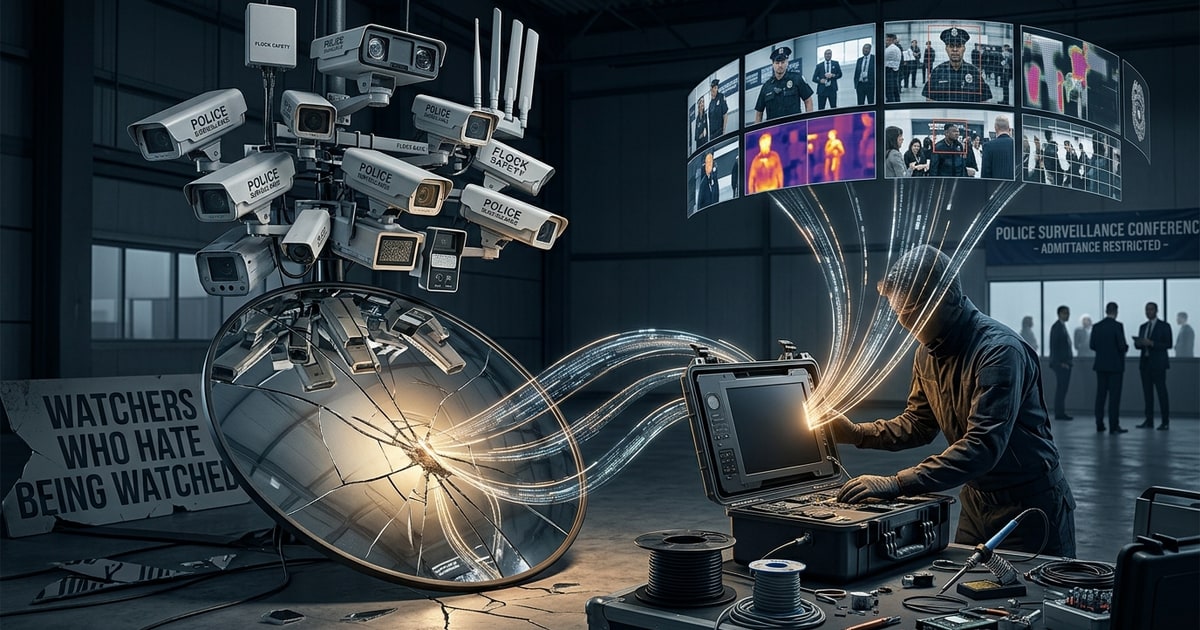
When Jordan first registered for the conference, he downloaded the official event app. Upon inspecting its source code, he discovered a massive data breach that exposed the entire guest list. Being a responsible researcher, he immediately alerted Flock Safety to the vulnerability.
Instead of thanking him, the company panicked. Realizing that their most vocal critic was planning to attend, Flock Safety promptly revoked his tickets and banned him from the event, claiming the conference was strictly closed to the media.
But the retaliation did not stop at the convention center doors. Before Jordan even arrived in Atlanta, a Flock Safety employee called his hotel and canceled his room reservation under his name, without his knowledge or consent. The company went so far as to book out surrounding rooms and parking lots to keep him as far away as possible.
"Flock takes their privacy very seriously when profiting off of the exploitation of yours. But that ethical gray area in surveillance technology works both ways."
Turning the Cameras Around
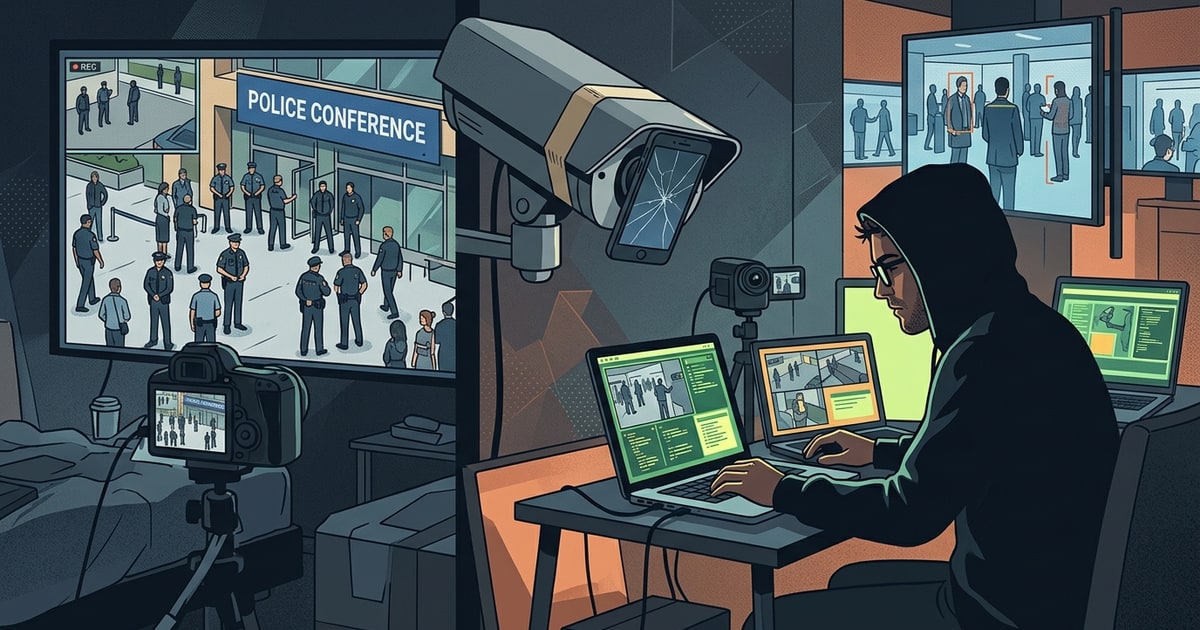
Undeterred by the corporate blockade, Jordan set up a mobile surveillance station in a public parking spot within view of the hotel. Equipped with a van full of WiFi adapters, a parabolic dish antenna, and a dipole array, he was able to intercept the unencrypted public wireless microphone signals broadcasting directly from the convention hall.
Then, he launched a hobby drone.
In a poetic twist of fate, Jordan did to Flock Safety exactly what Flock Safety sells to law enforcement. He flew his drone over the venue, filming the politicians, police officers, and lobbyists who had gathered to discuss the expansion of public tracking.
The drone footage captured several prominent figures, including: Julianne Ortman, a former Minnesota state senator. Rich Stanek, a former Hennepin County sheriff. Surveillance Lobbyists*, now working as partners at a consulting firm that actively helps Flock Safety expand its reach into local law enforcement agencies.
These public figures gathered on the taxpayer's dime to pitch more cameras, even as local towns in states like Minnesota are actively voting to suspend these surveillance programs and pull the cameras down.
You can watch the entire counter-surveillance operation and see the footage for yourself in Benn Jordan's video, Flock values their privacy. Oh well..
The Security Researcher They Fear
Flock Safety has a long history of downplaying its security vulnerabilities, repeatedly insisting that its network has never been hacked. Yet Jordan is the researcher who proved just how fragile that network truly is.
Over the past year, Jordan discovered dozens of Flock Safety cameras sitting entirely exposed on the open internet with no password protection whatsoever. Anyone who stumbled upon the IP addresses could: 1. Watch live, unencrypted video feeds from neighborhoods and public roads. 2. Access and download up to 30 days of stored historical footage. 3. In some instances, delete recorded data entirely without leaving a trace.
Rather than addressing these systemic flaws with transparency, Flock has pivoted toward even more invasive technology. The company recently acquired a drone startup for over $300 million and is now marketing police drones designed to scan and read license plates from 2,000 feet in the air.
"A man with a hobby drone and a grudge did to Flock exactly what Flock sells to cops. They could not stomach three days of it."
Demanding Accountability
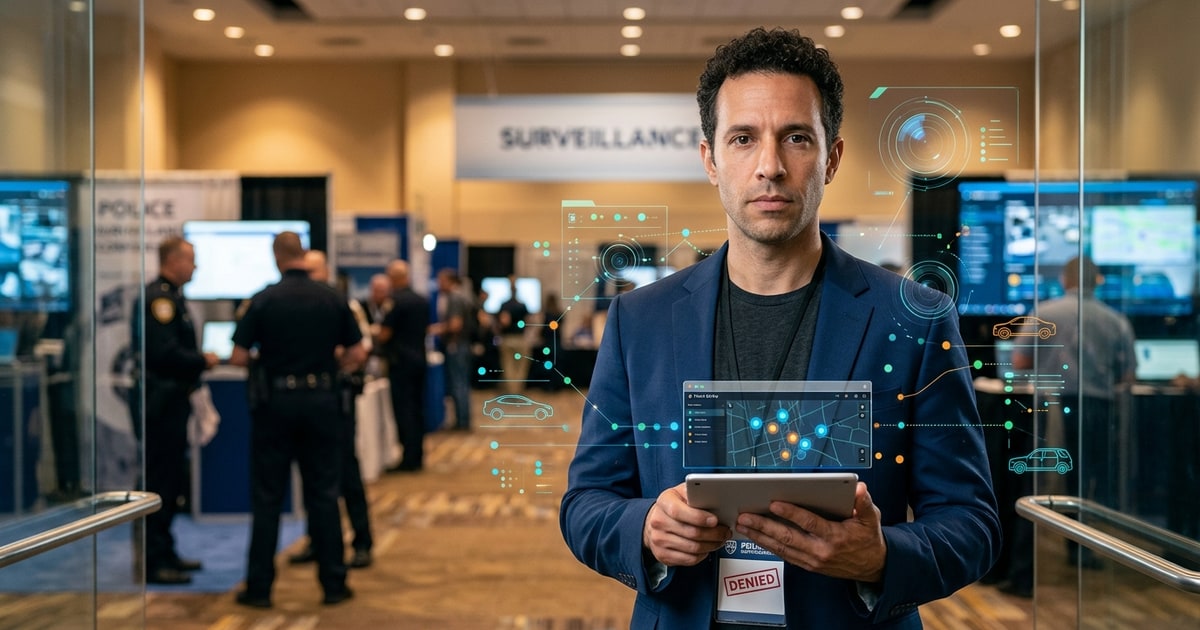
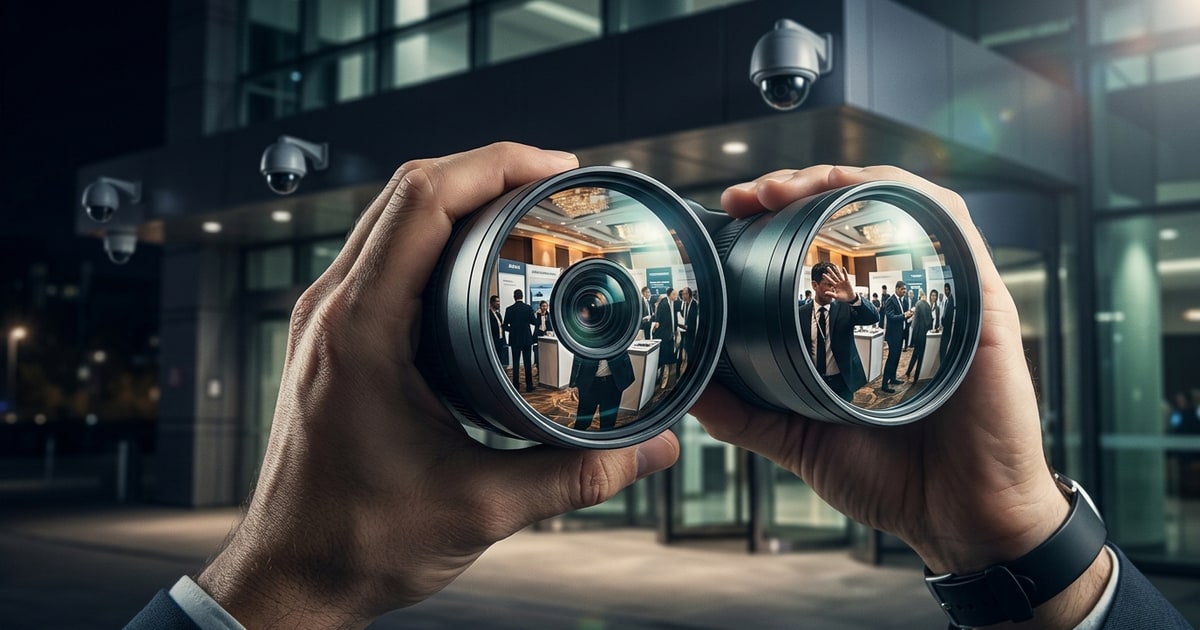
The hypocrisy of the Atlanta conference is glaring. Public money buys these cameras, and public money funded the tickets of the public servants who attended the event. Yet, the moment a citizen decided to watch them, they demanded the very right they deny to everyone else: the right not to be recorded.
If you believe that mass surveillance companies should not operate with taxpayer funding while dodging public accountability, you can take action. Consider signing The Other 98's petition telling Congress to defund Flock Safety to make your voice heard.
Ultimately, Jordan's weekend in Atlanta proved that those who advocate for constant public monitoring are the quickest to hide when the cameras are pointed back at them. True safety does not come from unchecked corporate surveillance; it comes from transparency, accountability, and the courage to watch the watchers.
Sources
Verified source links
About this article
Marlin Andrews Sr. is the named author responsible for this published work. Blog Zone authors review their final articles and contribute the experience, viewpoint, reporting, or analysis presented.
Read our editorial standards
Community rating
Members can rate this blog
Comments & replies
Share what stood out, add useful context, or ask the writer a question.
Join the conversation
We-Be members can comment, reply, and rate blogs. Membership is free and only takes a moment.